Playbook
Use AI in small business: a practical guide for operators who are skeptical
AI is not magic. It's a tool that compresses expert time on specific tasks. Here's how to use it without the hype.
1. What history teaches us
Every major technology transition in American business history followed the same pattern. The early adopters who won were not the ones who adopted most aggressively — they were the ones who adopted most specifically. Walton did not buy a satellite network because satellite technology was exciting. He bought it because he needed inventory data in a form that was impossible any other way.
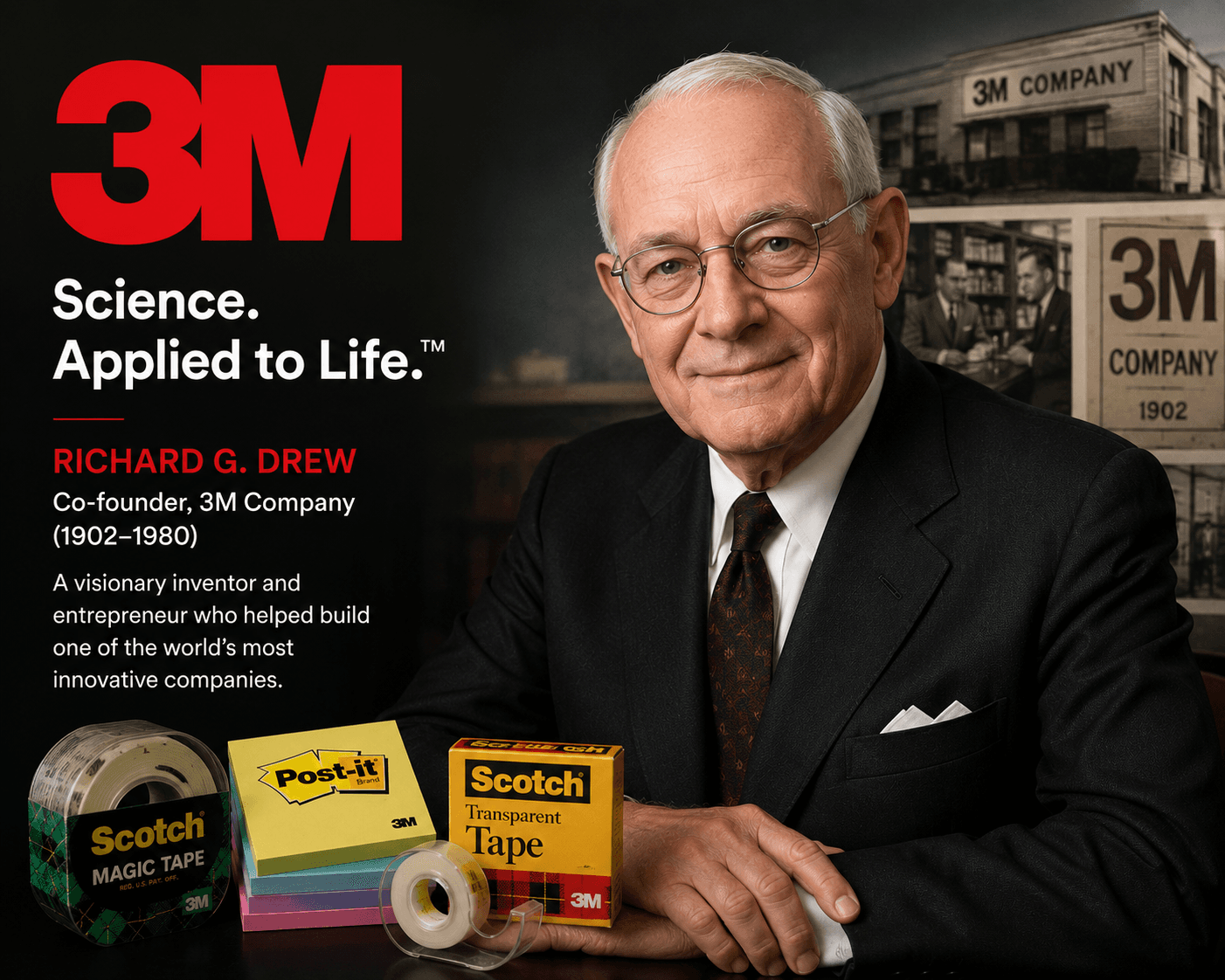
3M built Post-it Notes from a technology accident because their culture made it possible for Spencer Silver's failed adhesive to reach Art Fry's choir hymnal problem. The technology was not the innovation. The information system — the culture of sharing research results across departments — was the innovation.
AI in 2025 is at the same inflection point that the internet was at in 1997 or smartphones were at in 2009. It will be integrated into every business operation within a decade. The question is not whether you adopt it — you will, because your competitors will — but whether you adopt it strategically or reactively.
2. Business examples
Customer communication: A plumbing service in Austin used AI to draft initial responses to customer inquiries, including preliminary pricing ranges and availability windows. A human reviewed and sent each response. Response time dropped from 4 hours to 22 minutes. Close rate on quoted jobs increased by 18% because the customer's interest had not cooled.
Financial forecasting: A specialty retail store used AI to analyze three years of sales data and produce monthly forecasts by product category. The owner had previously done this manually on Sundays, taking three to four hours. The AI produced an equivalent report in eight minutes. The owner used the saved time to visit supplier showrooms she had been avoiding.
Content and marketing: A regional restaurant group used AI to draft weekly social media content and email newsletters. A marketing manager edited and published. Content output increased fourfold; quality, as measured by engagement rate, was unchanged.
In each case, the AI was applied to a specific, well-understood task with a human reviewing the output. In no case was the AI used to make decisions independently.
3. The common SMB problem
Most small business operators who have tried AI tools report the same experience: the tool produces something that's "pretty good but not quite right." They correct it, and then correct it again on the next use, and eventually stop using it because the editing feels like as much work as doing it themselves.
This is a calibration problem, not an AI capability problem. The tool is general-purpose; your business is specific. The solution is not to find a better tool — it is to write a better prompt.
A good prompt for a business task describes the context, the standard, and the format expected. "Write a response to a customer inquiry" is a bad prompt. "You are a customer service representative for a residential HVAC company in Phoenix. Write a response to this customer inquiry: [inquiry]. The response should: 1) acknowledge the specific issue they described, 2) provide a preliminary estimate range of $150-400 depending on diagnosis, 3) offer two available appointment slots in the next 48 hours, 4) close with our cancellation policy." That is a prompt that produces usable output on the first try.
4. Practical steps
Step 1: Choose one task. Your first AI task should be something you do weekly, that is primarily text or analysis, and that has a clear standard. Customer inquiry responses are the most common first use case for service businesses. Social media drafts work well for retail. Financial summarization works well for businesses with consistent data.
Step 2: Build the prompt. Document your standard in the form of instructions. What does a good output look like? What tone? What specific information must be included? What should not be included? Write the instructions as if briefing a capable but completely uninformed assistant.
Step 3: Test and refine for two weeks. Use the AI tool for your chosen task every time the task comes up. Each time the output is not right, identify exactly what was wrong and add that to your prompt. After two weeks, most prompts are stable.
Step 4: Measure. Track time spent on the task before and after. Track quality — for customer communication, track response rate, close rate, or satisfaction. For content, track engagement. For financial analysis, track the time from data availability to decision.
Step 5: Expand one task per month. Do not try to automate everything at once. The bottleneck is not the AI's capability — it is your capacity to build and maintain good prompts.
5. Tools and technology categories
General AI assistants: Claude, ChatGPT, Gemini. Best for text drafting, analysis, summarization, and ideation. Require good prompts to produce useful output consistently.
Specialized tools: Many software platforms now include AI features within tools you already use. Email clients, CRMs, accounting software, and scheduling tools all have embedded AI that is applied to context they already have. These often require less prompt engineering because the context is pre-loaded.
Automation platforms: Zapier, Make (formerly Integromat), n8n. These connect your tools and can trigger AI tasks at specific events — a new customer inquiry triggers a draft response, a completed order triggers a follow-up message. These require some technical setup but pay off at high volume.
6. Questions to ask before scaling AI use
- Do I have a human reviewing every AI output that goes to customers?
- Do I have a feedback loop — a way to know when the AI output caused a problem?
- Is the task I'm automating one where consistency and speed matter more than judgment?
- Can I explain to a customer, if asked, that an AI helped draft the response they received?
- Does the time saved justify the time spent maintaining the system?
If you can answer yes to all five, you have a healthy AI practice. If you cannot, add more human review before adding more automation.
Stories behind this playbook



The Owl Brief
One story. One growth lesson. One practical idea — every Sunday.
No spam. Unsubscribe any time.